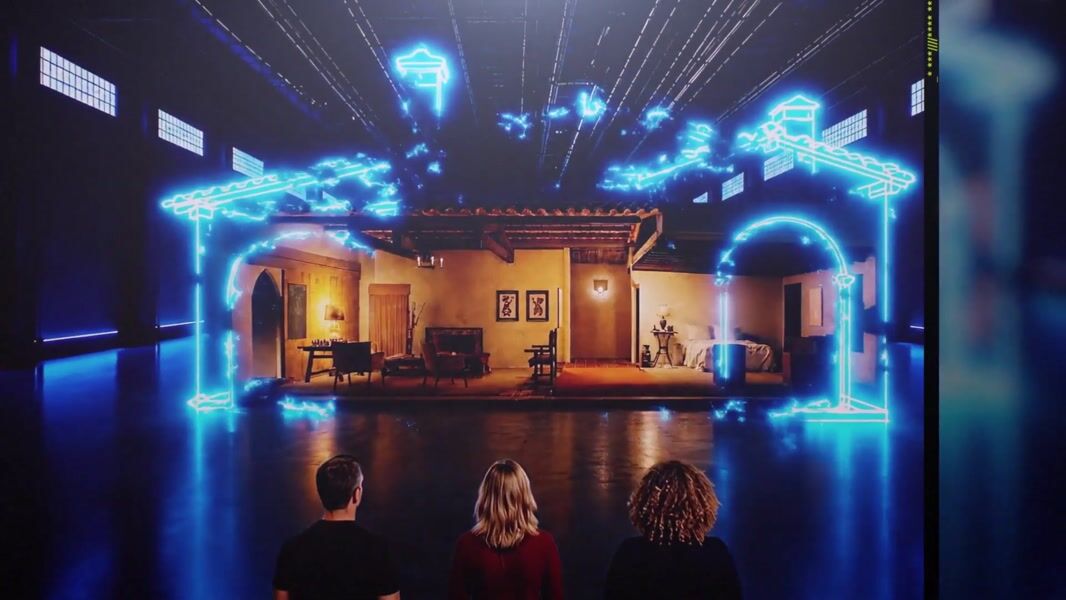
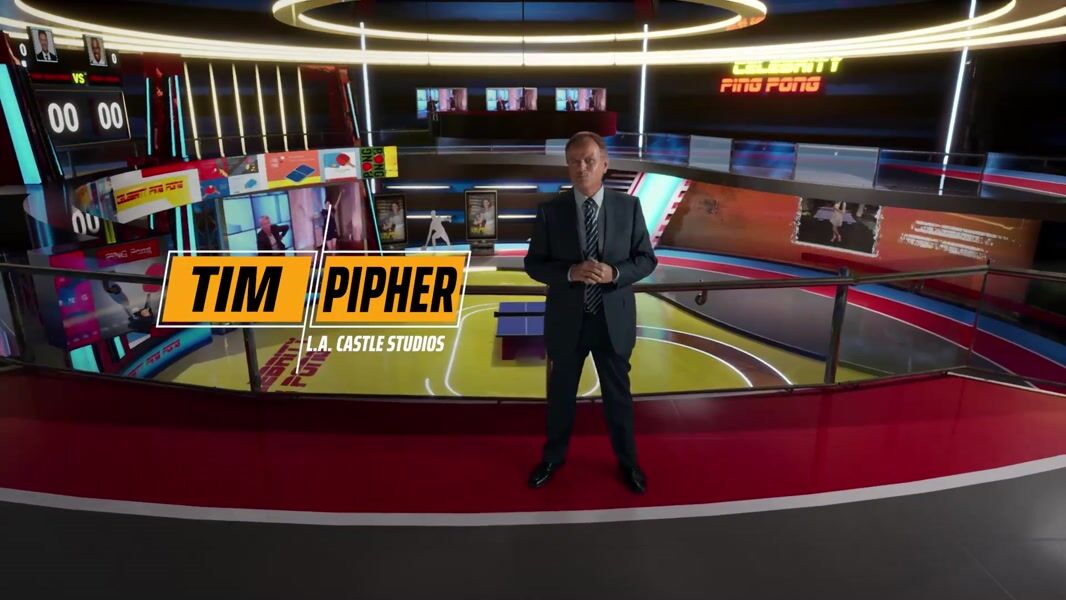
What Is Virtual Production? A Plain-English Guide From Its Pioneers
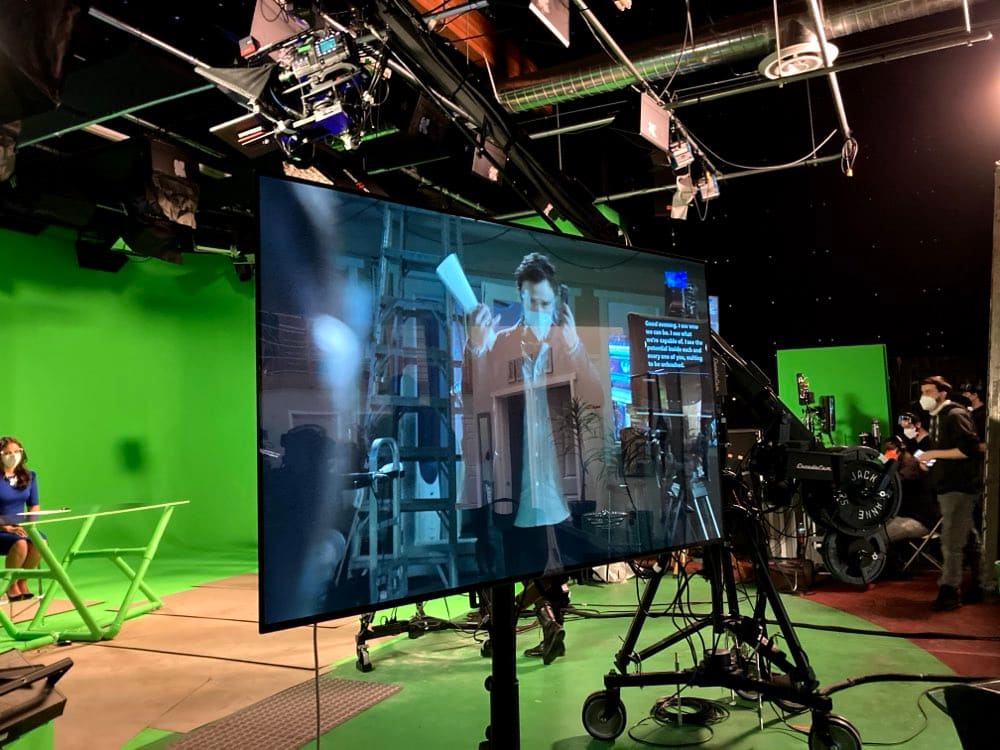
Virtual production is filmmaking that combines live actors with photoreal digital environments in real time, so the finished shot appears on the monitor while you’re shooting it. Instead of building sets or traveling to locations, the production loads a digital world. And the camera captures the actors inside it.
That’s the whole idea. The execution is where most articles get it wrong: they treat “virtual production” and “LED wall” as the same thing. They aren’t. We’re L.A. Castle Studios. We pioneered real-time virtual production in 2007, years before The Mandalorian made LED volumes famous, and the method is now protected by two U.S. patents. So here’s the full picture, in plain English, including the part of virtual production beyond LED walls.
How virtual production works: the three main approaches
Every flavor of virtual production shares the same core. A game engine, almost always Unreal Engine, renders a photoreal 3D environment, and a camera-tracking system tells that environment exactly where the real camera is. As the camera pans, tilts or dollies, the digital world shifts with correct perspective and parallax, which is what makes the result read as a place rather than a backdrop. What differs between the approaches is how the actors and the environment end up in the same frame.
1. LED volumes: the famous approach
An LED volume surrounds the talent with a large curved wall (often plus a ceiling) of LED panels displaying the Unreal environment. The region of wall directly behind the actors is rendered live in the tracked camera’s perspective, so the camera photographs actors and background together in a single exposure.
The genuine advantages: the actors can see the world around them, and the wall casts real, interactive light and reflections onto faces, wardrobe and glossy surfaces. Which is why the approach took off for productions with reflective costumes and long dusk-lit vistas.
The honest limits: cameras that move independently have to share the same wall space, which complicates multi-camera shooting; the frame is bounded by the physical size of the wall; and the panels themselves are among the most expensive real estate in production. Our LED volume vs green screen page sets out where each approach wins.
2. Real-time green-screen compositing: in-camera finals without the wall
The second approach, the one we pioneered, replaces the wall with a green screen and a broadcast-grade live compositor. The tracked camera feeds an Ultimatte keyer, the Unreal environment renders in that camera’s exact perspective, and the two are composited live: final pixels, in camera, on the day. This is the method behind our patented CastleVision pipeline, and you can read the full technology stack here.
Because each camera carries its own tracker and its own rendered perspective, the approach works natively with multiple cameras, a talk show, panel or news format can cut between angles all day with every angle correct. Environments swap in seconds rather than requiring new wall content, and the frame isn’t bounded by any physical wall. The trade-off is the mirror image of the volume’s: the talent sees the finished world on monitors around the stage rather than wrapped around them, and lighting the environment onto the actors is a craft done with stage fixtures rather than cast by a wall. We’ve written a deeper series comparing green screen and LED walls if you want the shot-by-shot version.
3. Hybrid and post-composited green screen
The third lane is the deferred one: shoot green screen with tracking data (and often a live preview composite for framing), then finish the composite in post. Maximum flexibility later, but you wrap without the shot. And you pay for every frame of it in the VFX schedule. Many productions mix lanes, shooting in-camera finals for the bulk of a schedule and reserving post-comp for a handful of shots that need bespoke work.
The producer’s comparison
| LED volume | Live green-screen compositing | Green screen finished in post | |
|---|---|---|---|
| Final image | In camera | In camera | Assembled in post |
| What talent sees | The environment, on the wall | The composite, on monitors | Green |
| Multi-camera | Harder: independently moving cameras share the same wall | Native, every camera gets its own perspective | Possible, but each camera multiplies post work |
| Changing locations | New wall content; frame bounded by wall size | Load a new environment in seconds | Decided later, in post |
| Light on talent | Real, cast by the wall | Built with stage lighting | Matched in post |
| Known risks | Shared wall across cameras, fixed frame size, panel cost | Green-spill and screen-lighting discipline | Post schedule and budget creep |
| Cost profile | Highest day rate | Mid. Stage and operators, no wall | Lowest day rate, largest post bill |
When you’re vetting stages, ask which of these three they actually run, “virtual production” on a website can mean any of them, and the differences land directly on your schedule and budget.
What virtual production changes on set
The technology is the means; the on-set experience is the point.
- The director sees the shot. Not a green rectangle and a promise: the composed, composited frame, live on the monitor. Blocking, eyelines and lens choices get made against the real image.
- Clients and agencies sign off on the day. When the monitor shows finished pixels, approval happens at the stage, not three weeks into post.
- Actors get context. On a volume, the world surrounds them; on a real-time green-screen stage, monitors around the floor show them the composite, so they know where the skyline ends and what they’re looking at.
- The company move disappears. A schedule that spans a newsroom, a penthouse and a city street is a load operation, not a travel day. This single fact is most of why producers are moving to virtual production.
- Wrap can mean done. With in-camera approaches, the footage that leaves the stage is the footage that airs.
Is virtual production cheaper than shooting on location?
Honest answer: usually, and for reasons you can audit line by line rather than take on faith. Against a traditional multi-location schedule, virtual production deletes set construction and strike, location fees, travel and lodging, weather contingency and company moves. And shrinks the permit chase (filming at our Burbank studio presently requires a film permit; at our Albuquerque studio, no film permit is required at all). Against traditional green-screen-plus-post, the in-camera approaches delete most of the compositing bill.
What it adds back: environment preparation if you need a custom world built (a library of ready-made sets removes most of this), and the operators who run the system. On our stages, the virtual set operator, the person driving the environments in real time, is always included in the rate; camera operators and a teleprompter operator are available as an optional crew package. Whatever stage you’re comparing, get the inclusions in writing.
Where it isn’t cheaper: a one-location shoot at a real place that’s free and nearby, or work that physically depends on a real exterior. And among the virtual approaches themselves, the LED volume is the premium route. Panel rental and volume crew put its day rate at the top of the table above.
Who uses virtual production
- Film. Feature work uses all three approaches, volumes most visibly. Shot here: Aquaman 2.
- Television. Multi-camera formats are where real-time compositing shines, because every camera gets a correct angle. Hart to Heart shot its winery set on our stage, and the Diarra from Detroit cast-reunion aftershow shot here.
- Commercials and advertising. Agencies asking which companies offer virtual production for advertising will find two camps. LED-volume operators and real-time green-screen stages. The format fits spots unusually well: many looks, one day, client approval on the monitor. A T-Mobile spot shot on our stage became one of the most-viewed commercials of 2021. Our page on choosing a virtual production company covers how to vet either camp.
- Corporate and branded content. Town halls, product launches, training and executive messaging: polished environments without a location budget attached.
Where to see it running
Definitions only go so far; the pipeline is better in person. If you’re producing in Southern California, here’s what we operate as a virtual production studio in Los Angeles. Our Albuquerque studio is one of the largest virtual production stages in the world, and our Burbank studio runs the same pipeline on a pre-lit green cyc, which is also available as a green screen studio rental. The Unreal Engine virtual production studio page covers the environments, the workflow and what a shoot day looks like. And if you’d rather talk it through against your own script or spot, book a studio tour and we’ll run it live.
Frequently asked
- What is virtual production in simple terms?
- Virtual production means shooting live actors inside photoreal digital environments in real time, so the finished shot appears on the monitor while you're filming it. Instead of building a set or traveling to a location, the production loads a digital world, a newsroom, a penthouse, a spaceship, and shoots it immediately.
- Is virtual production the same as an LED volume?
- No. An LED volume is one way to do virtual production, actors perform in front of a huge LED wall displaying the digital environment. Real-time green-screen compositing is another: the environment is keyed in live behind the actors, producing final pixels in camera and working natively with multiple cameras. L.A. Castle Studios pioneered the real-time method in 2007 and runs it on green screen rather than an LED volume.
- Is virtual production cheaper than shooting on location?
- Usually, for any schedule involving more than one location. Virtual production removes set construction, location fees, travel, weather delays and company moves. The line items that consume a location budget. It isn't automatically cheaper for a single simple setup, and among the virtual approaches LED volumes carry the highest costs; real-time green-screen stages deliver the same in-camera result without the wall rental.
- What is a virtual production stage?
- A soundstage built and wired for shooting inside digital environments: camera tracking, a real-time engine (usually Unreal Engine) rendering the world, and either an LED wall that displays it or a green screen with a live compositor that keys it in behind the actors. Plus the operators who run the system. L.A. Castle Studios' Burbank and Albuquerque studios are both built the second way: green screen with live compositing rather than an LED volume.
Tags: