How to Start a Talk Show Podcast
To start a talk show podcast: pick a premise and a host model, set a repeatable episode structure, record with a good microphone and one steady camera, edit lightly, publish audio to Spotify and Apple Podcasts and video to YouTube, cut clips to grow, and move into a studio once the show has traction.
That’s the whole recipe. What follows is the how, for the creator or small producer launching a talk-show-format show for YouTube, Spotify and Apple Podcasts, in plain English and in the order the decisions actually come up. One boundary up front: this guide is about the podcast lane. If you’re producing for broadcast instead, a rundown, three-camera coverage, a crew, a studio audience, we’ve written that guide separately: how to produce a talk show. This one assumes you’re starting with a microphone, a camera and an idea.
1. Pick a premise that survives episode 30
A talk show podcast isn’t “two people chatting.” It’s a repeatable premise with a point of view, a subject the host owns, a reason a listener comes back every week, and a title that says what the show is before anyone presses play.
The fastest test: write ten episode titles before you record anything. If they come easily and sound different from each other, you have a show. If they’re all variations on “we talk about stuff,” you have a hangout, and hangouts don’t grow.
Narrow beats broad at the start. A weekly talk show about the business of independent film finds its audience faster than a show about culture, and you can widen the lane once you’ve earned an audience that trusts you.
2. Choose your host model
Three models cover almost every talk show podcast:
- Solo host with guests. The classic interview show. Easiest to book, hardest to carry. The host’s questions are the show, and a flat guest means a flat episode.
- Co-hosts. Two or three regulars with chemistry, guests optional. Easiest to sustain, because the hosts are the content and a cancelled booking doesn’t cancel the episode.
- Host, sidekick and guest chair. The late-night model: a lead host, a foil who reacts and keeps the energy up, and a guest. This is the most “talk show” of the three and the most work to schedule.
Pick the model that matches the people you actually have. A co-host you can record with every Tuesday beats a dream guest you can book once.
3. Structure the episode, and settle the length
Talk shows work because they’re built from blocks. Write yours down as a short rundown and keep it the same every episode:
- Cold open or hook, the best moment of the episode, or the question it’s going to answer.
- Monologue or news block. What happened this week in your subject, in the host’s voice.
- The main segment: the interview or the topic. This is most of the runtime.
- A recurring bit: a game, a listener question, a ranking. Bits are what people quote.
- Close and tease. What’s coming next week, and the one ask (subscribe, follow, share).
Fix that order, time each block, and the length takes care of itself. Talk-show-format podcasts commonly run anywhere from about 30 minutes to well over an hour; the right number is whatever your blocks fill without padding. Consistency matters more than the figure. An audience that knows what an episode of your show feels like will come back for it.
4. Gear, in three honest tiers
The rule that saves the most money: audio first, video second, set last. Listeners forgive a soft image; they never forgive a bad microphone.
Tier 1: start with what you own
- A phone camera on a tripod at eye level, framed with the light source in front of you, not behind.
- A USB microphone a few inches from your mouth: much closer than feels natural.
- A quiet room with soft surfaces. A closet full of clothes is a better vocal booth than a tiled kitchen.
- Remote guests recorded with a platform that captures each side locally rather than recording the call. The difference in audio quality is the difference between a podcast and a phone call.
Tier 2: the “it looks like a show” kit
- One dynamic microphone per seat. Dynamic mics reject untreated-room noise better than condensers, which is why broadcasters use them.
- An audio interface or small mixer recording each microphone on its own track, so one person’s laugh doesn’t ruin the other person’s sentence.
- A mirrorless camera, or two, one on each seat, with clean HDMI out and a capture card if you’re switching live.
- A key light at roughly 45 degrees to your face, a softer fill on the other side, and a backlight to lift you off the wall. Lock the white balance so episodes match.
- A real desk or two chairs and a side table, and something with depth behind you, a window, shelves, a doorway, rather than a flat wall.
Tier 3: the studio kit
- Three cameras: a wide master, a single on the host, a single on the guest.
- Broadcast lighting keyed to every seat, so no one’s face changes when the shot does.
- A microphone on every chair into a mixer, with a switcher for a live line-cut or multitrack for post.
- A set that reads as television, and a teleprompter for the scripted opens and sponsor reads.
You usually don’t buy tier three; you rent it by the day. More on that below.
5. Record at home or in a studio?
At home, the room is free, you can record whenever a guest is available, and you control every variable. The costs are hidden: the hour of setup and teardown each week, the neighbor’s leaf blower, the look you can’t change, and the ceiling on how professional the show can appear.
In a studio, you pay per session and walk into cameras, lighting and sound that are already working, with a look you couldn’t build in a spare bedroom. The costs are visible (the rate, the travel, the scheduling), and that’s the point: you’re trading money for time and quality.
The honest answer for a new show is to start at home. The show is the premise and the host, not the room, and you’ll learn more from ten imperfect episodes than from one polished one. The middle path many shows settle into is home for the weekly episode and a studio for the episodes that matter. A season premiere, a sponsored run, the guest you’ve chased for a year, or a live-audience taping.
6. Video or audio-only?
For a talk show, video-first. The format is visual by nature: reactions, the desk or the couch, two people playing off each other. Video is what YouTube and Spotify surface, it’s what your clips are cut from, and the audio track comes free. You publish it to Apple Podcasts and Spotify through your RSS feed so audio listeners get the same episode.
The caveat is real: video roughly doubles the work. You have to light, frame, dress the background and edit pictures as well as sound. If that workload is the thing stopping you from publishing, start audio-only, get the premise and the rhythm right, and add video when the show is steady. Nobody ever grew a show they didn’t ship.
7. Edit, then distribute: YouTube, Spotify, Apple Podcasts
Edit lightly. Cut the false starts, tighten the open, level the audio so the host and guest sit at the same volume, and add a title card and lower thirds. Build a template in your editor on episode one and reuse it. The goal is a repeatable hour of post, not a bespoke film every week.
Then distribute through two doors:
- The RSS door. A podcast hosting service turns your audio episodes into an RSS feed; you submit that feed once to Apple Podcasts, Spotify and the other directories, and every new episode flows out automatically.
- The video door. Upload the video episode to your YouTube channel and keep the episodes in a dedicated playlist. At the time of writing, YouTube can also ingest a podcast RSS feed and generate static-artwork videos for audio-only episodes in supported regions. Useful early, but a real video episode does far better. Spotify accepts video versions of episodes through its creator tools (MP4 or MOV uploads), so the same episode can play as video there too.
Title episodes the way someone would search for them, the guest’s name and the specific topic, rather than with an inside joke. Episode 14 titled with a name and a claim gets found; “Ep. 14: Chaos!” doesn’t.
8. Grow it: clips and consistency
- Consistency first. Same day, same time, every week, and commit to a full season, say ten to twelve episodes, before you judge the numbers. Most shows quit before the audience arrives.
- Clips are the marketing. Cut the strongest moment of each episode into short vertical clips, captioned, with the show name on screen. One episode should yield several. This is the biggest single reason to record video.
- Guests are distribution. Send every guest their clips the day the episode goes live and ask them to share. A guest’s audience is the most qualified audience you’ll ever reach.
- Faces and hooks. Thumbnails with faces and a short, specific hook outperform logos and episode numbers.
- Ask once, on air. Put the follow or subscribe ask right after the best moment, not at the top of the show before you’ve earned it.
9. When to move into a real studio
The signals that a talk show podcast is ready for a studio are usually obvious in hindsight:
- A sponsor, a brand or a network is in the conversation, and the show needs to look like the deal.
- The guests you’re now booking are people you need to impress in person.
- You want a look, a network desk, a late-night skyline, a warm lounge, you can’t build in your space.
- You want a live audience in the room.
- Setup and teardown at home are eating the hours you should be spending on the show.
- You’re planning a season, not an episode, and you want episode twelve to look exactly like episode one.
Two or more of those, and the studio stops being a luxury and becomes the cheaper way to make the show you’re now making.
Recording a talk show podcast on a virtual production stage
This is where our lane crosses yours, so here’s exactly what it is and isn’t. L.A. Castle Studios runs virtual production stages in Burbank, California and Albuquerque, New Mexico. The same multi-camera stages we run for talk shows, interview shows and newscasts. The set is a photoreal virtual environment composited live in camera with our patented CastleVision method: green screen, Unreal Engine and real-time compositing, so the finished shot is on the monitor while you record, not built in post, no wall of any kind, just the finished image in the viewfinder. We pioneered real-time virtual production in 2007, now patented, and the podcast rental is that same stage booked for a smaller show.
For a talk show podcast, that changes four things:
- The network look without the build. Your show tapes on real talk show furniture, a desk, or a couch and side table, in the foreground, and the environment behind you is one of 250+ ready-to-load virtual sets, the desk-and-couch looks on our talk show sets page, a newsroom, a late-night skyline, an intimate two-chair interview look. The backdrop swaps in seconds, so you can run one signature look all season or change the world between segments or episodes without striking anything. For what a talk show set actually includes, see our talk show set design guide; for how that compares with building one, see virtual vs. traditional talk show sets.
- Multi-cam that’s already running. The rental is a multi-camera network television stage. Cameras, broadcast lighting and audio are part of it, and the teleprompter system is on the stage with an operator available as an add-on. Green rooms, makeup, dressing rooms and production offices are on site for the guest handling a talk show needs.
- A live audience when you want one. Audience seating is available for live tapings, stadium-style at the Burbank stage, so a season finale or a special can be recorded the way networks tape theirs.
- An explicit crew model. The virtual system operator who drives the environments in real time is always included in the rate. Camera operators and a teleprompter operator are an optional crew package. Read that line item carefully anywhere you book, because “crew” means different things at different facilities.
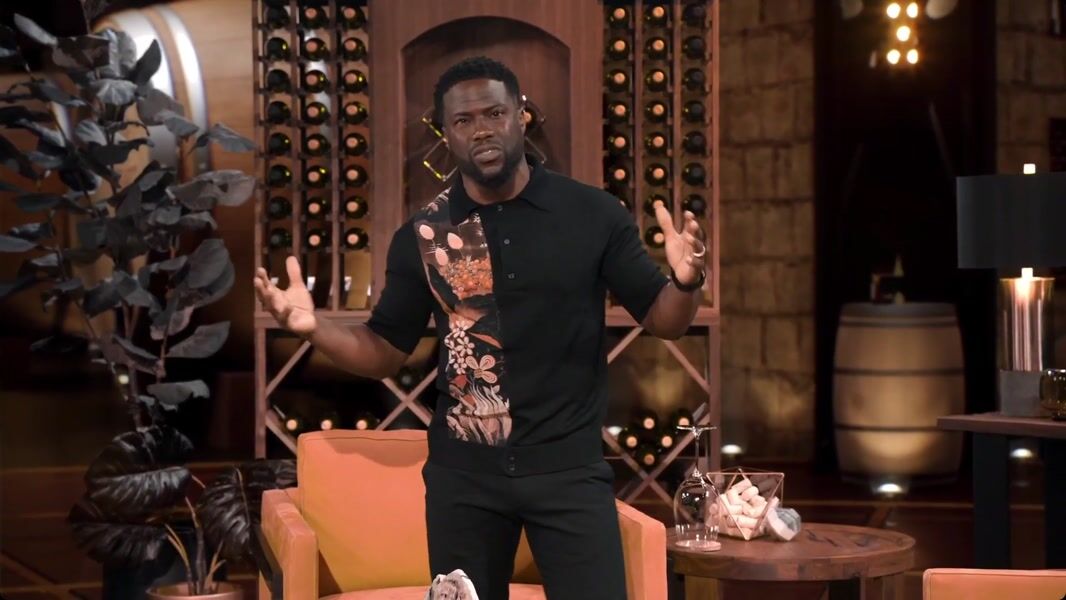
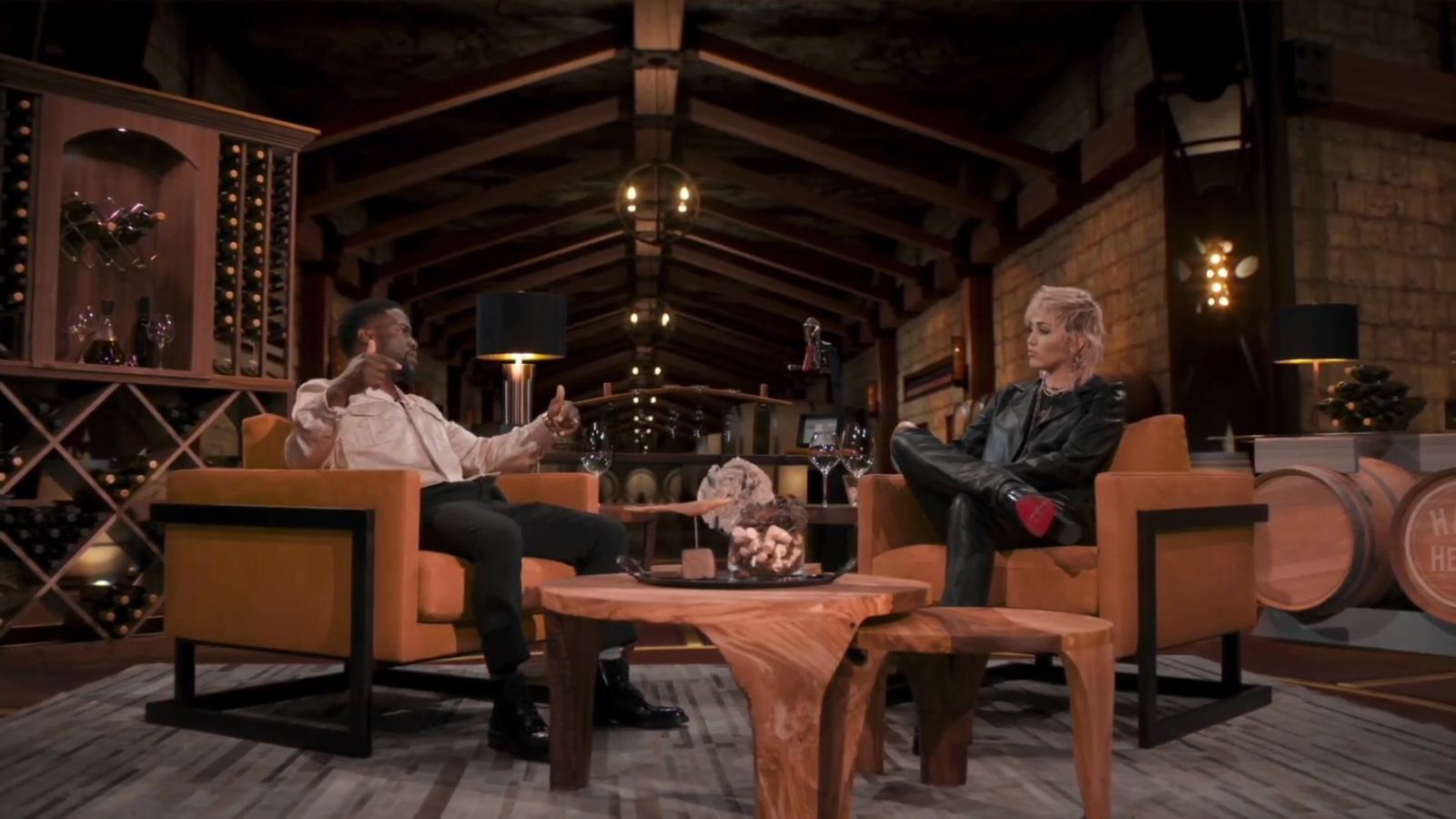
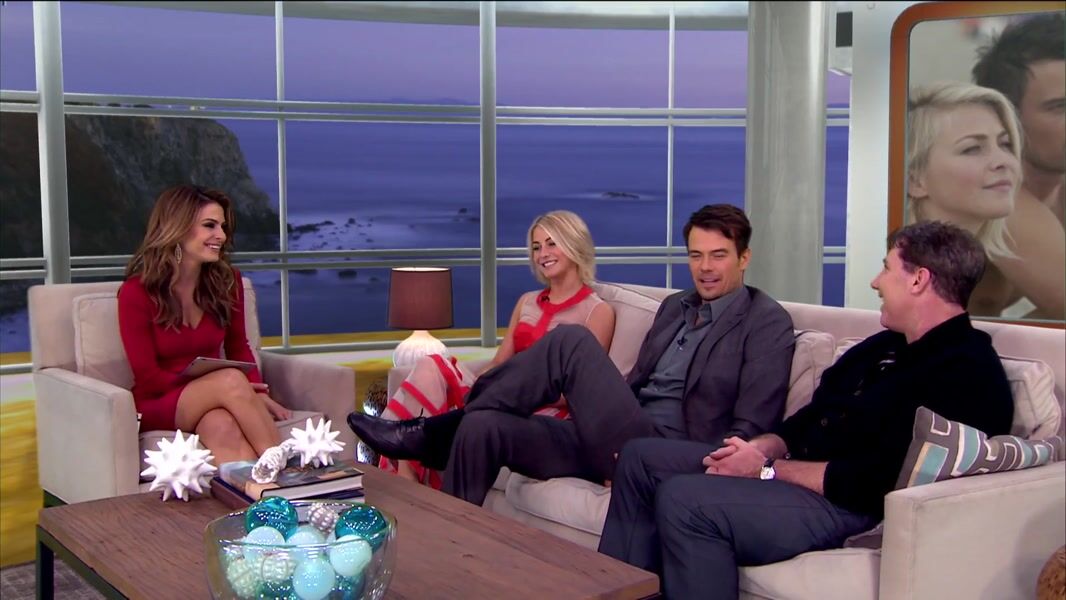
The proof is on the tapings. Kevin Hart’s Hart to Heart taped on the Burbank stage inside a grand winery environment; LeBron James’ talk show recorded here with guest Tony Hawk; and the Safe Haven talk show, the frame at the top of this post, was staged on our broadcast set. A talk show podcast on the same stage gets the same pipeline with the crew sized to the show.
Two practical notes if you’re comparing the locations: the Burbank stage presently requires a film permit; the Albuquerque stage, one of the largest virtual production stages in the world, does not, and it’s a Qualified Production Facility where a shoot can qualify for New Mexico’s 30% refundable film tax credit. Either way, a podcast rental is quoted to the show, format, episode count, dates, rather than a rack rate, and what drives the cost is spelled out.
If your show is at tier one, keep going. The premise, the host and the habit are what matter, and none of that needs a stage. When it’s ready for tier three, our podcast studio in Los Angeles and the Albuquerque stage are where a talk show podcast gets a network look for a taping day, not a build. Tell us about the show, the format, the episode count and the dates, and we’ll walk you through the looks, the coverage and the day.
Frequently asked
- How much does it cost to start a talk show podcast?
- It depends on which of three tiers you start at. And you don't have to start at the top. Tier one uses gear you already own: a phone camera, a USB microphone and daylight from a window, so the real cost is your time. Tier two adds a dynamic microphone per seat, an audio interface, a mirrorless camera and a key light. A one-time purchase that carries you through a season. Tier three is a studio rental: you stop buying gear and pay per taping day for a stage where the cameras, lighting, audio and set already exist. The honest rule is to spend on audio first, video second and the set last, and to move up a tier only when the show has earned it.
- Do you need a studio to start a talk show podcast?
- No. Most talk show podcasts start in a spare room, an office or a garage, and a quiet room with a good microphone beats a bad studio every time. A studio earns its keep later. When you need a network-style look you can't build at home, multi-camera coverage with people to run it, a live audience, or a set that stays identical across a whole season without you maintaining it. Start at home, and book a studio when the show, or a sponsor, needs it.
- How long should a talk show podcast episode be?
- As long as your segments fill without padding. Talk-show-format podcasts commonly run anywhere from about 30 minutes to well over an hour, and the format tolerates length better than most because the conversation is the content. The better question is structural: a cold open or hook, a monologue or news block, the main interview, a recurring bit and a close. Fix that order, time each block, and the episode length falls out of the rundown rather than the other way around. Then cut the highlights into short clips for the audience that never plays a full episode.
- Video or audio. Which should a talk show podcast be?
- Both, recorded video-first. The talk show format is visual by nature, reactions, a desk or a couch, two people playing off each other, and video is what YouTube and Spotify surface and what your clips are cut from. Record video, then publish the audio track to Apple Podcasts and Spotify through your RSS feed so listeners who prefer audio get the same episode. If you can only do one thing well at the start, make it audio: a viewer will forgive soft video, but nobody forgives a bad microphone.
- How do you get guests for a talk show podcast?
- Start with people one step away from you, colleagues, peers, the interesting person your co-host knows, and make the ask easy: a clear premise, a fixed recording slot, a short list of the topics you'll cover and a promise of the clips they can share afterward. Publish consistently, because prospective guests look at your last five episodes before they say yes. As the show grows, authors and publicists on promotion cycles will start coming to you, and a professional-looking set and clean audio are what make the better ones say yes.