Filming on an Unreal Engine Stage: A Producer's Guide
If you’re pricing out a shoot and someone said “look into an Unreal Engine stage,” this is the guide you were looking for. Not a technical deep-dive for engine operators, a plain-English walkthrough for the person who has to deliver the project: what an Unreal Engine filming studio actually is, what a shoot day looks like, what to bring, and how the money compares to building sets or chasing locations.
One thing to clear up first: if you’ve been searching for an Unreal Engine tutorial before renting an Unreal Engine stage, you can stop. You’re not the operator. When you book an Unreal Engine virtual studio, the virtual system operator who runs the engine is included in the rate, and camera and teleprompter operators are available as an optional crew package. Your job is the same as it’s always been: script, cast, schedule, budget. The stage handles the rest.
What an Unreal Engine stage actually is
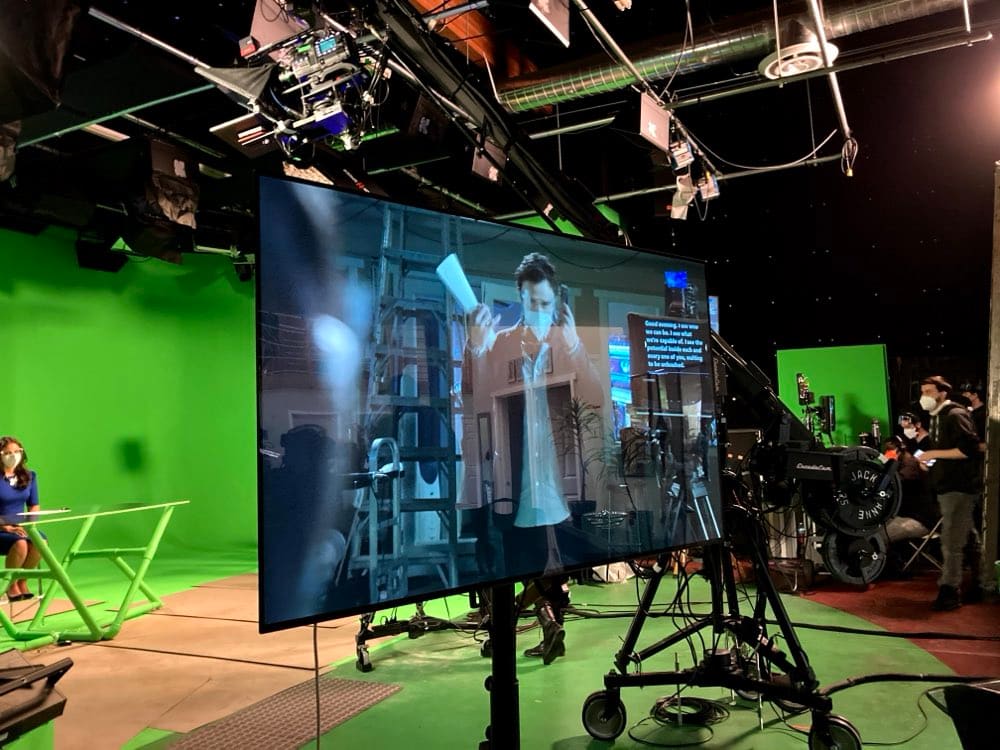
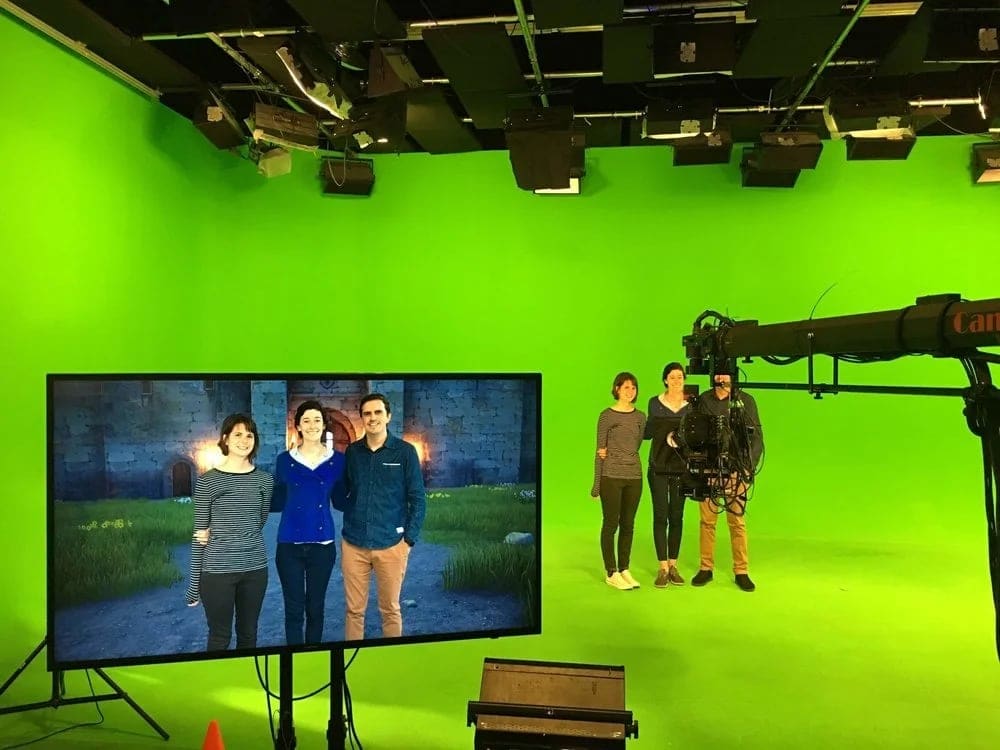
An Unreal Engine stage pairs a green screen cyclorama with real-time camera tracking and Unreal Engine, the same engine behind today’s biggest games and film worlds, so your actors are composited into photoreal digital environments live, in camera. The final look is on the monitor on set, not stitched together months later in post.
You may have heard of LED volumes; this isn’t that. It’s virtual production beyond LED walls: no fixed wall size, no wall edge to frame around, and the environment isn’t locked to one loaded world. We pioneered this method in 2007, and it’s now protected by two U.S. patents. It also runs true multi-camera: each camera gets its own render, so cameras can move independently and still see the same space.
How a shoot day works
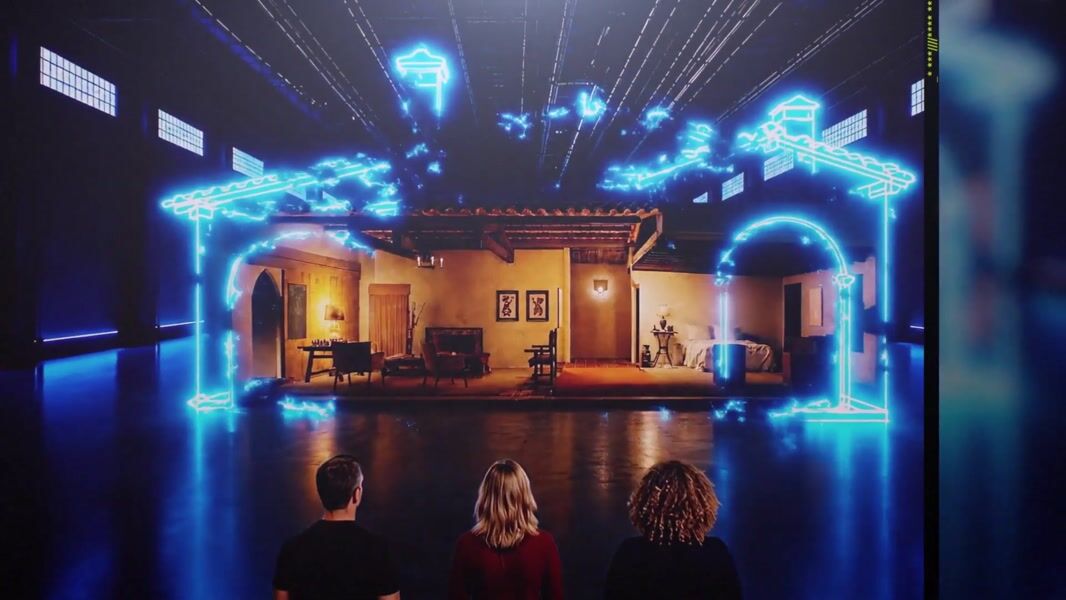
Here’s the part that surprises producers the first time. Your director walks on stage, calls for the location, a network newsroom, a Manhattan penthouse, a working spaceship, and it loads in seconds. Not a construction day. Not a company move. Seconds.
From there the day runs like any well-oiled stage day, just faster:
- You see the finished shot as you roll. Live in-camera compositing means the director is judging the actual frame, and actors can see the world they’re playing to.
- Multiple cameras capture simultaneously. Coverage in one take instead of three. Which is why talk shows, game shows, and interview formats love this pipeline as much as narrative crews do.
- “Location moves” happen between setups. Morning in a hospital corridor, afternoon in a city alley, without anyone loading a truck.
The stage crew drives the engine, the tracking, and the compositing. Your DP lights talent the way they always have.
What to prepare before you arrive
The productions that get the most out of an Unreal Engine filming studio show up with three things ready:
- Script and boards. The earlier the stage team sees your scenes, the better they can prep environments, angles, and any custom tweaks, set dressing in the virtual world is a conversation, not a change order.
- Your set picks. Browse the set library, hundreds of ready-to-shoot environments, and shortlist the worlds that fit your story. If a scene needs something bespoke, flag it early.
- Practical foreground pieces. Anything talent touches should be real: the desk, the chairs, the coffee cup, the doorway they lean on. A few smart practicals anchor the composite and sell the shot completely.
Wardrobe note for green screen: skip anything in the key-green family. Your stage contact will walk you through the short list of dos and don’ts before the shoot: that’s the whole “tutorial” a renter actually needs.
What it costs vs building sets or going on location
We won’t invent numbers here. Every job is quoted to your production, because a two-day interview shoot and a multi-week series don’t cost the same. What we can tell you is which line items come off the budget entirely: set construction, set dressing and strike, virtual set storage fees, location fees and scouting, travel and lodging, weather contingency, and company moves. When one stage day covers what would have been three locations, the math tends to make the decision for you.
Who it’s for
Producers who need premium results on real-world schedules: series and features, news and interview formats, talk shows and game shows, commercials, music videos, and indie projects that could never afford the locations their scripts call for. If your production is based in Southern California, our Burbank studio puts all of this inside a working virtual production facility in Los Angeles, with the same pipeline also running at our Albuquerque studio.
The next step
Tell us what you’re making. Get in touch with the script, the boards, or even just the idea, and we’ll walk you through how it shoots on an Unreal Engine stage. And what it would cost your production, specifically.