Micro Drama Production Companies: Who Makes Vertical Dramas — and Where They Shoot
Micro dramas went from novelty to a market measured in billions of dollars in a few years, and the people searching for micro drama production companies now come from every direction: platforms commissioning slates, brands testing the format, investors sizing the category, and producers deciding whether to go vertical. It’s a genuinely confusing landscape, the companies making these shows mostly aren’t the studios that make traditional television, and the production requirements don’t look like anything else on a call sheet. Here’s how the industry is structured: the platforms, the kinds of production companies serving them, and what an eight-day, hundred-episode shoot actually demands from a stage.
What is a micro drama?
A micro drama, also called a vertical drama, a micro series, or a vertical micro-series, is a serialized show made for phones. The names vary by platform; the format specs don’t:
- 60–100 episodes per season, each about one to two minutes long
- Vertical 9:16 framing, composed for a phone held upright: not widescreen cropped after the fact
- Cliffhanger cadence, nearly every episode ends on a hook, because nearly every episode ends where a viewer could stop paying
- Mobile-first distribution through dedicated apps, which typically give the opening episodes away and sell the rest through in-app purchases or subscriptions
- Compressed production. A full season shoots in roughly eight days
Played back-to-back, a season feels like a feature cut into ninety-second pieces. Romance premises dominate the charts, billionaire, revenge, second-chance, with thriller and fantasy close behind, and the economics reward whoever can produce the most watchable minutes at the lowest cost, fastest.
The platforms that commission vertical dramas
The demand side of the market is a handful of vertical-streaming apps. ReelShort and DramaBox are the category’s revenue leaders, each has reportedly passed hundreds of millions of dollars in cumulative in-app revenue, with ShortMax among the fastest-growing platforms behind them and a widening field that includes NetShort, GoodShort, DramaWave and others. Downloads across the category run into the hundreds of millions, and industry reporting now sizes the global market in the billions of dollars a year.
What matters if you’re a producer is how these platforms source shows. Three pipelines feed the apps: originals developed in-house by the platforms’ own or affiliated studios; commissioned series made by outside production companies to a platform’s brief; and licensed titles, a large share of the catalogs began as Chinese-language series dubbed or remade for Western audiences. The commissioned lane is the one growing fastest for U.S. producers, as platforms chase English-language originals shot with American casts.
The four kinds of micro drama production companies
Platform-affiliated studios. The biggest apps produce many of their titles through parent or affiliated companies, controlling everything from script development to the thumbnail. If you’re pitching one, you’re pitching an in-house pipeline with its own data on what converts viewers into payers.
Independent vertical production companies. These are the companies most searches are looking for: lean shops that produce commissioned series to a platform’s brief or develop verticals on spec. Much of the English-language production has clustered in and around Los Angeles, drawing on the city’s actor and crew base. A vertical shoot may be fast, but it still needs performers who can carry a season and a crew that can hold the pace.
Traditional production companies and brands moving in. As the category’s revenue became hard to ignore, established producers began adding vertical slates and brands began exploring the format for story-driven marketing. They bring higher production standards and less tolerance for corner-cutting, which raises the bar on where these shows shoot.
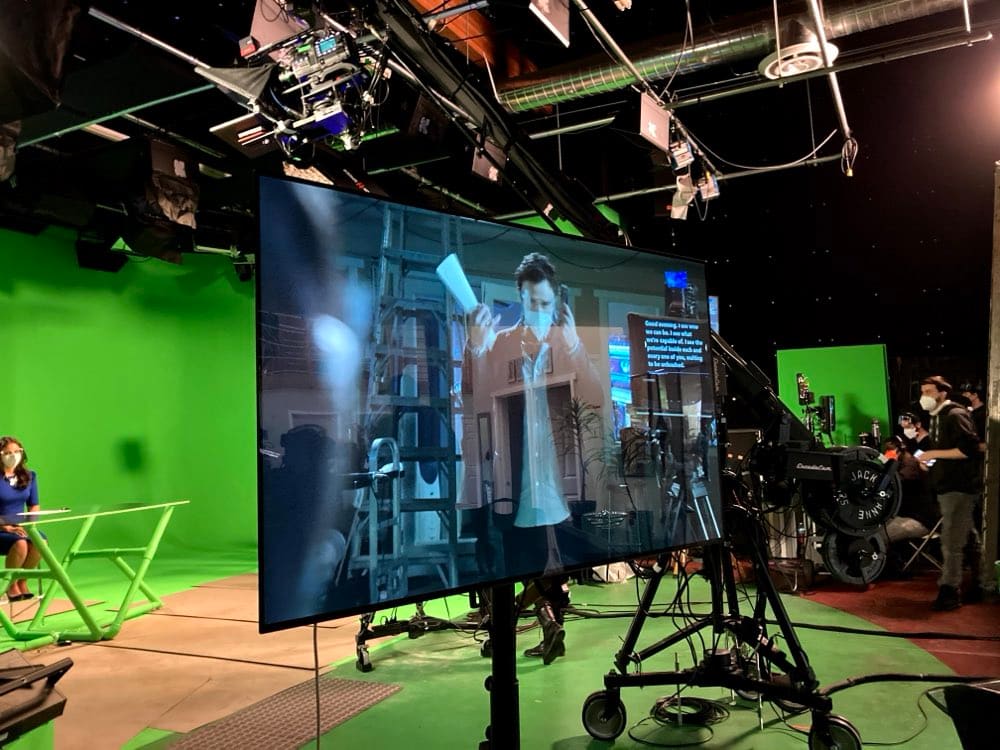
The stages the shows shoot on. Every company above shares one physical problem: producing 60–100 episodes in about eight days. That’s a facilities question as much as a creative one, and it’s where L.A. Castle Studios sits in this landscape: the studio micro drama production companies shoot with. Producers bring the script, cast and creative; the stage makes the schedule possible. You keep the IP, the platform deal and the credit.
The production math: eight days, a hundred episodes
The numbers are what separate vertical drama from everything else in television:
- Eight-day shoots (sometimes stretching to ten) for a full season
- 15–25+ script pages a day, against a traditional drama’s five to eight
- Dozens of location looks per season, the standard billionaire-romance script cycles through a private jet, a penthouse, a CEO office, a hospital room, a city street, a restaurant and more
- 9:16 in every setup. Blocking, lighting and monitoring built around a vertical frame
The pace isn’t a badge of toughness; it’s the business model. Reported budgets for U.S.-produced verticals run a small fraction of traditional television, and those budgets only close if no shooting hour is wasted. That makes the company move the biggest enemy on a vertical schedule, pack, travel, unload, re-rig at every new location. Conventional production loses 20–40% of a shoot day to moves and setup. On an eight-day clock, that loss is fatal.
What these productions need from a studio
Follow the math backward and the stage requirements write themselves.
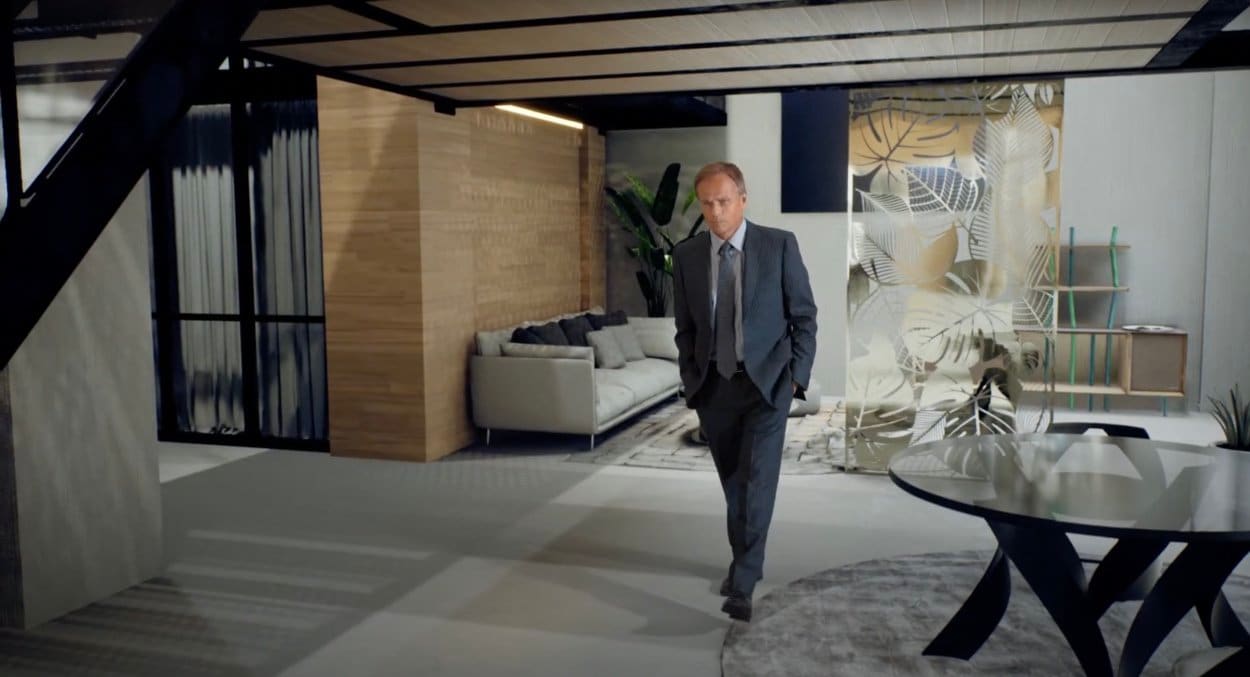
A designer loft, one of the format’s staple looks, composited live around the actor on our stage.
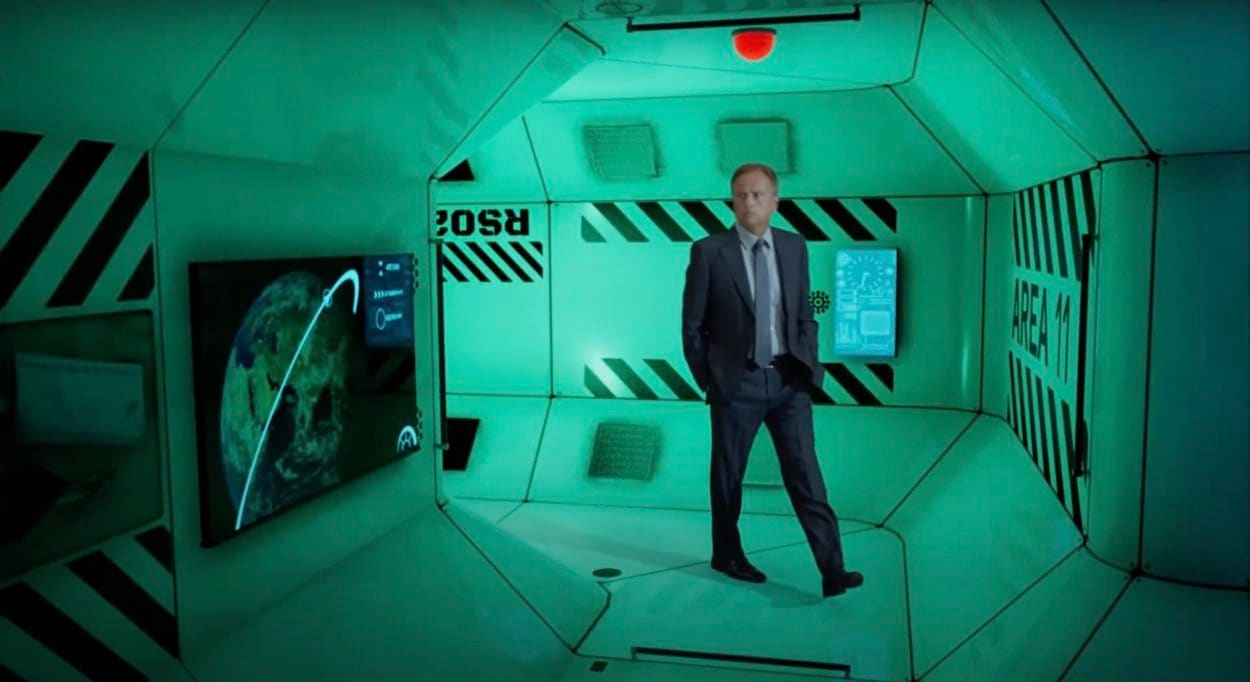
A space station module from the same library, a set change rather than a company move.
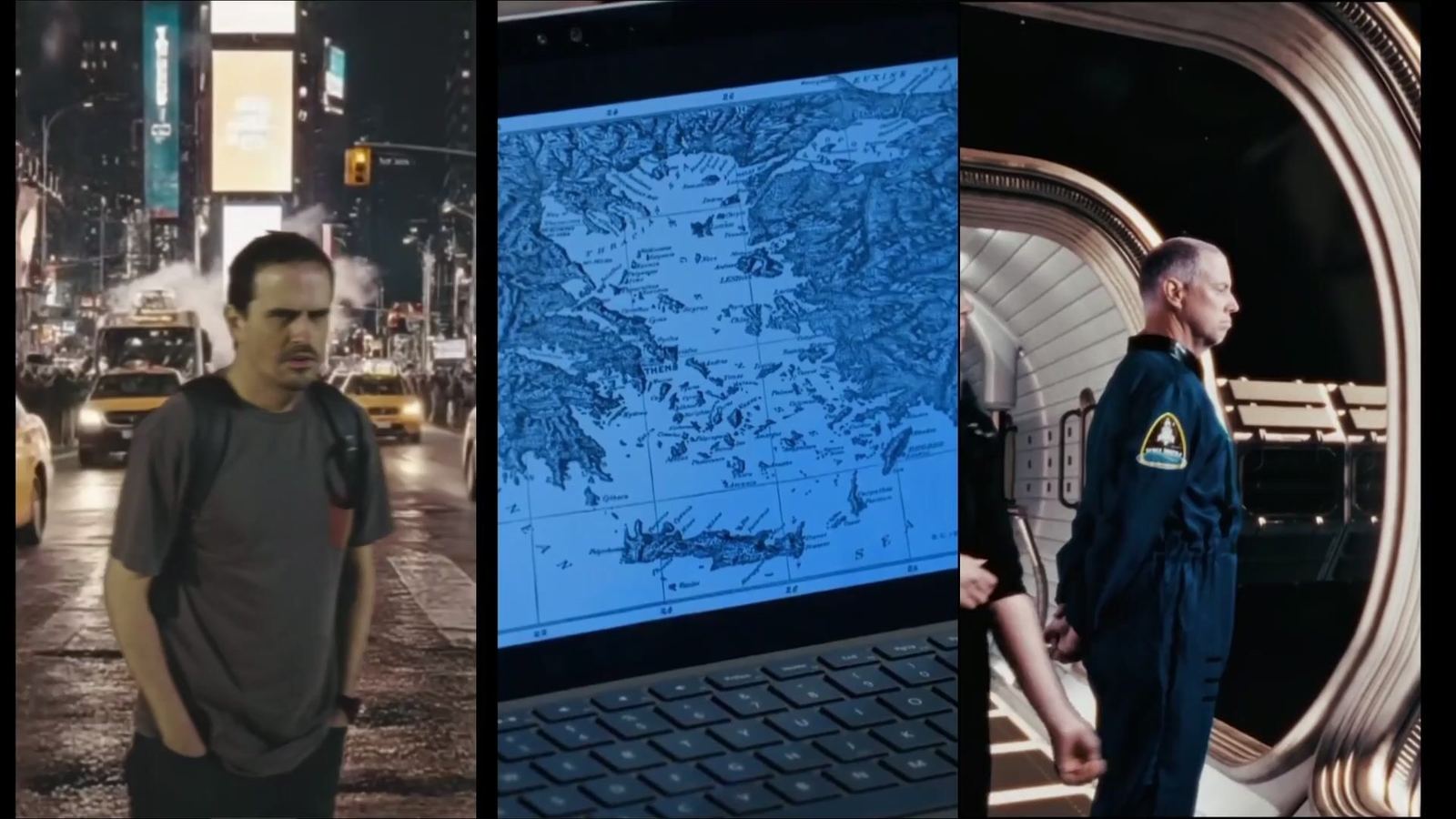
Every location under one roof. A season’s worth of looks has to exist in one building, ready instantly. Our stages carry 250+ instantly loadable virtual locations, among them the format’s staples: a private jet, a billionaire’s penthouse, a hospital room, CEO offices, city streets. The CEO office shoots at 9 AM, the jet at 11, the hospital after lunch. No trucks, no travel, no re-rig. This is the core of what a vertical drama studio in Los Angeles has to deliver on an eight-day cycle.
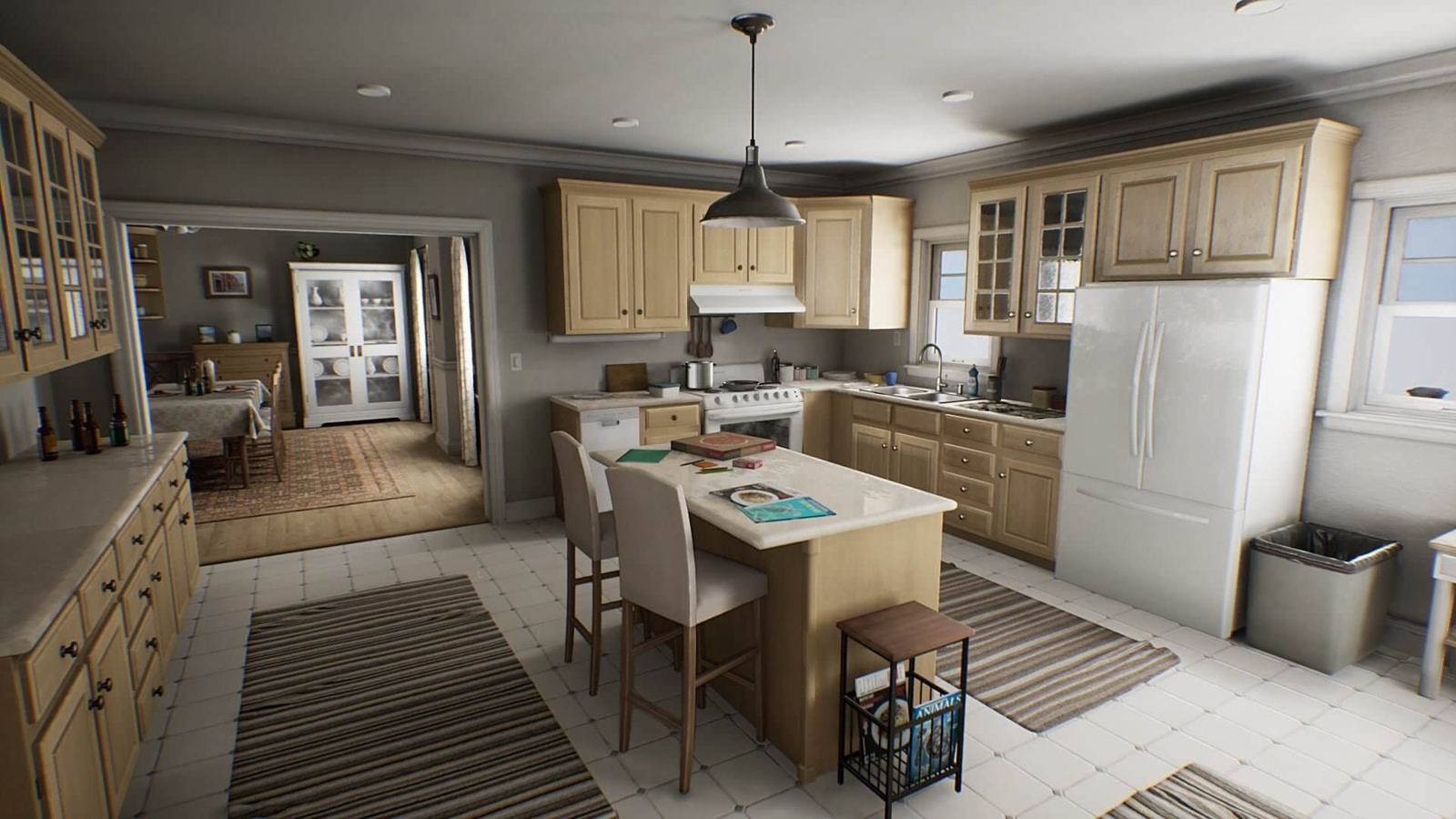
A suburban kitchen set, ready to load between the office and the hospital scenes.
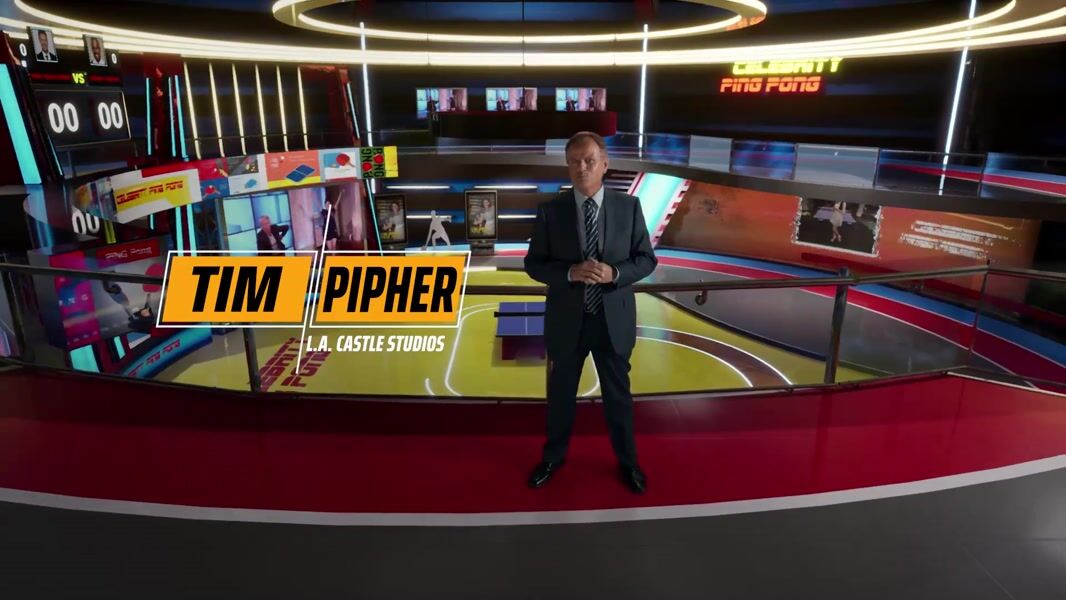
Final image on the day. The environments render photoreal in real time and composite live in camera with our CastleVision method. We pioneered real-time virtual production in 2007, now patented. Real furniture and props dress the foreground, so the frame cuts like a built set, and there’s no VFX pass standing between wrap and delivery, which matters when platforms expect finished episodes fast.
Multi-camera, framed for 9:16. Multiple cinema cameras cover a scene in fewer setups, and everything on the floor (blocking, lighting, monitoring) is calibrated to the vertical frame rather than cropped down from a horizontal one.
A clear crew model. On our stage the virtual system operator, the person driving the environments in real time, is always included; camera operators and a teleprompter operator are available as an optional crew package. Whatever stage you’re comparing, get the inclusions in writing rather than taking “crew included” at face value.
Proof in the format. Ask any stage for finished vertical work. Ours is in the gallery: vertical drama shot on our stage.
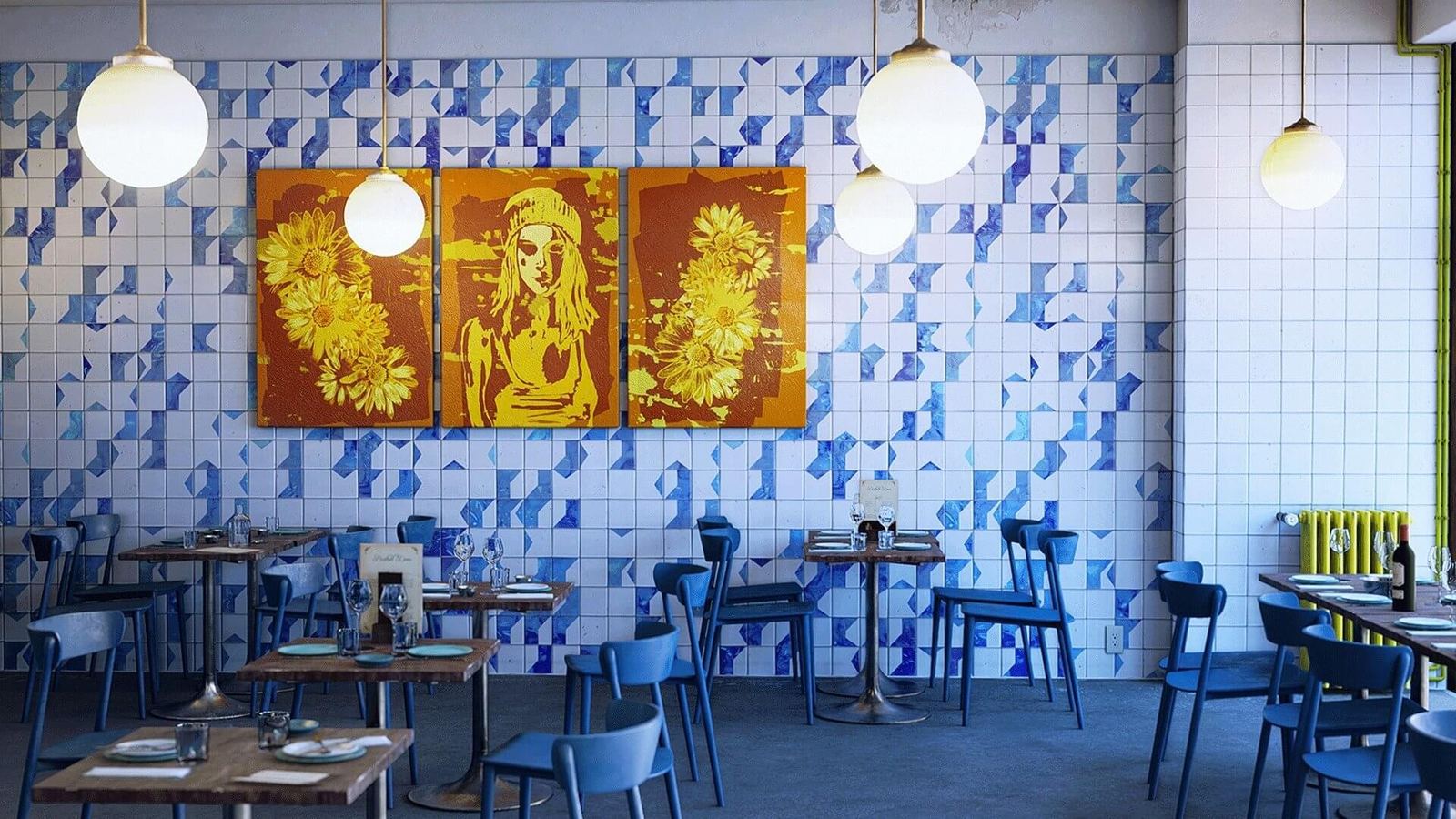
A casual restaurant set from the library, one of the everyday locations vertical scripts return to.
Two stages, two sets of logistics. The same pipeline runs in Burbank and in Albuquerque, one of the largest virtual production stages in the world. Filming in Burbank presently requires a film permit; at the Albuquerque stage, no film permit is required, and studio days there sit on the 30% track of New Mexico’s refundable film tax credit: a 25% base credit plus a 5% uplift for shooting at a Qualified Production Facility, a designation ABQ Castle Studios holds.
How to vet a micro drama production partner
Whoever you’re evaluating, an independent production company, a platform studio, or a studio, the same five questions cut through any pitch:
- What’s your pages-per-day track record in this format? Vertical pace is a learned skill; 15–25 pages a day is normal here and unheard of elsewhere.
- How many location looks can you deliver without a company move? This one number predicts whether the eight-day schedule survives contact with reality.
- Is the pipeline natively 9:16, or a horizontal setup cropped down? Retrofits are slower and more error-prone than stages built for the vertical frame.
- What exactly is included in the rate, and what’s optional? Crew, operators, equipment: get the list in writing.
- Can you show finished vertical work? The format is too specific to take on faith.
The companies winning in this category are the ones that solved the math, not just the melodrama. If the studio half of the equation is what you are scoping, see how our vertical drama production works (the locations, the pipeline, and the schedule it was built for), or check dates for your next block.
Frequently asked
- What is a vertical micro drama?
- A vertical micro drama is a serialized series made for phones: typically 60–100 episodes of about one to two minutes each, shot in vertical 9:16, with a cliffhanger closing nearly every episode. The shows are distributed through mobile apps such as ReelShort, DramaBox and ShortMax, which typically offer the opening episodes free and sell the rest through in-app purchases or subscriptions.
- What is a micro series?
- "Micro series," "micro drama," "vertical drama" and "vertical micro-series" all describe the same format, a serialized show with very short episodes made for mobile viewing. "Micro series" emphasizes the episode length (one to two minutes); "vertical" emphasizes the 9:16 phone-screen framing. Whichever name a platform uses, the production approach is identical.
- How long does a micro drama take to shoot?
- Most vertical micro dramas shoot a full 60–100-episode season in roughly eight days, sometimes stretching to ten. Hitting that clock means covering 15–25+ script pages a day, several times the pace of traditional television, which is why vertical schedules are built around eliminating company moves between locations.
- How much do micro dramas cost to produce?
- There's no single number, but the format's economics are the point: a vertical micro drama is made for a small fraction of a traditional television budget. Industry reporting on U.S.-produced series commonly describes budgets in the low-to-mid six figures for a full season, shot over about eight to ten days. The biggest cost drivers are cast days, crew days and locations. Which is why producers compress the schedule and shoot as many location looks as possible without leaving the stage.